Unlikely Spies
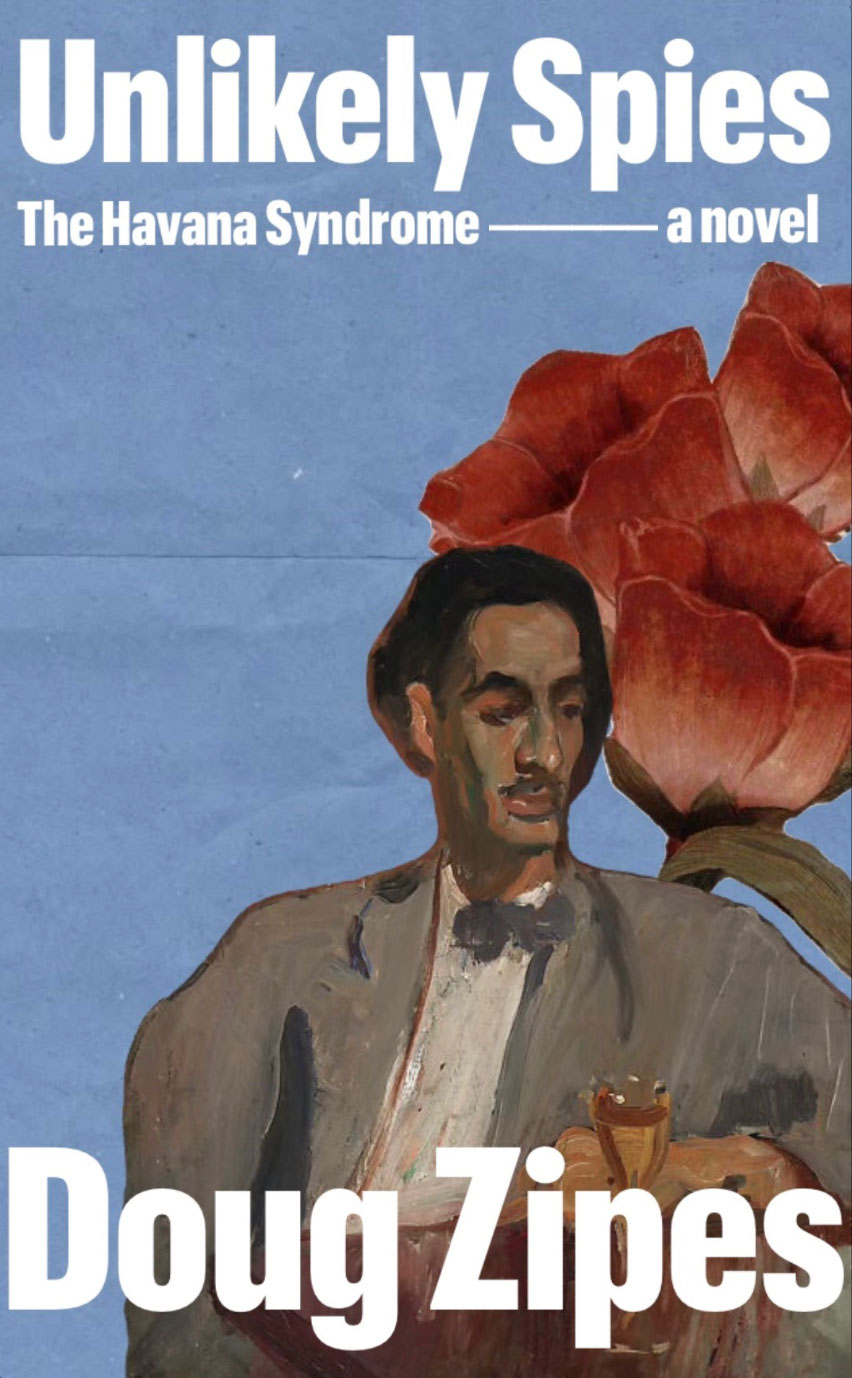
In a sequel to the novel Ari’s Spoon, renowned heart surgeon Gabe Goerner becomes a paraplegic after being shot by an angry patient’s son afflicted by the Havana Syndrome.
He learns robotic surgery to continue operating sitting down. Drawn into a web of espionage at the request of the US government, he uncovers a deadly weapon while navigating love and danger across Cuba, Beijing, and Washington.
In Unlikely Spies, Gabe’s life takes a dramatic turn when he is shot by a distraught patient’s son, leaving him confined to a wheelchair. Determined to reclaim his career, he learns robotic surgery guided by the skilled and passionate Scottie Santangelo, who becomes both his mentor and lover. Their relationship deepens as they face the challenges of his new reality and the complexities of their professional lives.
Gabe’s journey leads him to a covert mission for the U.S. government, where he is tasked with operating on the grandnephew of Fidel Castro, an infant suffering from a congenital heart defect. This operation is not just a medical procedure; it is a gateway into a world of intrigue and danger. As Gabe delves deeper into the investigation of the mysterious Havana Syndrome, he uncovers the existence of the Zytron weapon, a sinister tool linked to the affliction that has affected numerous diplomats and officials worldwide.
Set against the vibrant backdrop of Havana’s streets, the bustling energy of Beijing, and the high-stakes environment of the White House Situation Room, Unlikely Spies weaves a tale of resilience, love, and the relentless pursuit of truth. Inspired by real events, this gripping narrative explores the intersection of medicine and espionage, revealing the lengths one man will go to protect his country and those he loves.
5.0 out of 5 stars
The suspense and twists and turns were fabulous
“The book was fabulous to read. I couldn’t stop. I kept turning pages. One of the best thrillers I have read. I’ve read all of his other books and so should you. This is as good as any of the top flight thriller writers.”
Amazon Review
Prologue
The thunderous boom, a piercing, bone-deep vibration, cracked through Martini Fuentes’s skull like an ice pick. The sound was so sharp and final, it would change her life and possibly the world.
Tini sweated her way across the huge Plaza de la Revolución in search of the one thing so many Americans at the US embassy in Havana sought, even someone as young and healthy as Tini: pain meds. It seemed a simple enough quest, but pharmacies near the US embassy, as well as the Hotel Palacio Cueto where she was staying, were out of almost everything, including ibuprofen and aspirin. She hoped a pharmacy in another neighborhood would have that. Or something stronger.
She pulled her battered hat brim lower over her eyes, annoyed at the glaring afternoon sun that worsened her thumping headache. She stopped midstep, clutched her temples, and blinked against the dizziness that blurred her vision. The pavement seemed to sway beneath her. By the time she steadied herself, the noise was gone, replaced by the headache, hammering like a warning of worse things to come.
A coworker at the American embassy complained of similar symptoms and said Americans were being targeted by an extraterrestrial civilization that had taken over China and planned to capture the United States next. It was a ridiculous conspiracy, but it made her wonder if a country like Iran might be behind it. Maybe all the stories she’d heard about spies infiltrating the US were true, and one of those spies had singled her out because she worked at the embassy.
Her job as a twenty-five-year-old cultural affairs assistant at the US State Department seemed perfect for her. Tini was born in Havana, Cuba. Her father smuggled the family to Miami, where she’d grown up bilingual. She majored in international politics in college. Her father had told her so many stories about Havana, so she was thrilled when offered the opportunity to move and work there.
Her goal was to help the Cuban people in any way she could. After all, they were like family, and some actually were. Her own government was starving them with an embargo on everything from pain meds to food, even toilet paper. Unconscionable! Her father would be so proud of what his only child was doing.
She shook her head, her thick hazelnut braid swishing across her face, causing her to wince. Sweat trickled down her back, dampening the thin fabric of her summer dress. She paused to catch her breath and stood in the shadow of the sixty-foot white marble statue of José Martí, a star in Cuba’s battle for independence from Spain in the late 1800s. Flanked by the 350-foot tower behind, the statue created a tiny oasis of cool shade that eased her pounding head a little. She fluttered her arms, bird-like, to help dry the underarm wetness as she rested several minutes to enjoy the shade.
Tini pulled out the folded map from the handbag she’d purchased at the outdoor market near the hotel, a Michael Kors designer knockoff. The street merchant wanted fifteen dollars, but she bargained her down to ten. Street people were so poor, Tini felt guilty buying the bag for only ten dollars. So despite her successful bargaining, Tini gave her twelve. The merchant’s broad smile was worth the extra two dollars.
A red circle on the map marked a nearby street, but for a moment she couldn’t remember why she’d circled it. She stared at the map until the pieces of memory joined together like fragments of a jigsaw puzzle. A pharmacy, that’s what she wanted. Pain meds, something stronger than the ibuprofen she’d finished yesterday.
She aligned her position with the street circled in red, turned, and crossed onto the Avenida Independência. She stopped again, this time to gaze at the mural of Ernesto “Che” Guevara on the Ministry of the Interior building. The revolutionary hero reminded her of Santiago, the protagonist in Hemingway’s The Old Man and the Sea, written at his hilltop home, Finca la Vigía, ten miles east of where she stood. Both she and Santiago shared a deep ability for perseverance in the face of hardship and struggle. Santiago withstood physical pain as he fought to reel in the huge marlin yet never gave up. Tini was enduring this constant headache but kept going despite it, determined to help the Cubans overcome years of depravation under Castro.
Tini had never experienced a headache this severe. The dizziness and blurred vision terrified her. And her memory! The lapses reminded her of her grandmother’s senior moments when she forgot Tini’s name or called her Margaret, Tini’s mother.
It took longer than she expected to reach the pharmacy. Vintage cars, refurbished in dazzling chrome with replaced fenders and doors in bright yellow and blue, snailed along the street in front, belching clouds of exhaust that choked the air, turned the blue sky leaden, and blocked her path. She glimpsed the pharmacy sign swaying on a single wire over the door of a dilapidated building.
Her brain’s nonstop thumping made her desperate for any kind of pain relief, and she was now at the mercy of yet another pharmacy. Cuban health care was free, but medications, when available, were not. Simple over-the-counter pain meds like Advil and Tylenol, even aspirin, were like gold in these government-run drugstores.
Inside the pharmacy the air was cooler but stale. Rows of empty shelves stretched along the walls. Behind the counter stood an older man wearing a faded white coat, his hands tucked into the pockets. His name tag read Hector.
“You American?”
The voice seemed disembodied as Tini’s eyes adjusted to the store’s shadowy interior. It took a moment before the gray-haired pharmacist materialized. He looked frail and old, disgruntled at being interrupted.
“Yes, I work at the US embassy. I need a pain medicine.”
“What your name?”
“Martini Fuentes.”
“Your father Desiderio?”
“Yes. You knew him?”
“Muchos años atrás. Many years ago.”
“How wonderful!” She clapped her hands happily. “Were you friends?”
“Si. Amigos. He’s a good man.”
“How did you meet?”
Castillo dropped his voice. “We hated Castro. I helped your father escape Cuba. You were an infant.”
The conversation seemed to make him uncomfortable, and before she could thank him, he changed the subject. “What hotel you staying at?”
“Hotel Palacio Cueto near the US embassy.”
“Why you not go to the foreigner’s pharmacy in the hotel lobby? You get ibuprofen there, maybe Advil from Canada. Pay in tourist pesos.”
“I tried. They’ve run out. Lots of people asking for it. No aspirin, nothing. You have none?”
“No have.” Hector frowned, lips bowed down. “Too many damn Americans with headaches,” he mumbled, turned his back to write something on a piece of paper, and then busied himself with mortar and pestle, grinding some greenish concoction on the shelf behind the counter.
Tini was about to leave when he slipped the piece of paper onto the counter with his back turned to her. She picked it up, confused. A name, address. No explanation. Before she could ask what it meant, he waved her toward the door, his attention already elsewhere.
Tini stepped back into the heat, the note tucked deep in her pocket. Her headache was still there, a steady throb behind her eyes. She started walking, but something felt weird. The streets were busy as always, but her skin prickled with the sense that someone was watching.
She glanced over her shoulder. Nothing. Just the usual mix of tourists and locals. She shook her head, annoyed at herself. It was just the headaches. The dizziness. She was overthinking it.
Still, as she folded the map and tucked it back into her bag, she couldn’t shake the feeling that this wasn’t just about the lack of pain meds. Something was happening. And whatever it was, it wasn’t finished with her yet.
Chapter One
The last time Gabe Goerner walked was Tuesday, September 25, at 10:08 a.m.
That morning Gabe had watched the early light slip through the blinds as he wolfed down a quick breakfast of blueberry yogurt and coffee before heading to the hospital where he worked as a cardiovascular surgeon. He texted his wife, Cassie, to meet him for lunch at the hospital cafeteria. The hospital served a fat Nathan’s all-beef hot dog that he loved, especially when loaded with sauerkraut and drowned in tangy Dijon mustard—and to hell with his cholesterol.
Cassie was nearing completion of her twenty-four-hour shift in the emergency department. Their daughter, Zoey, was still asleep upstairs, another hour before the nanny woke her to catch the bus for school. He paused by her bedroom door, entered, and kissed her forehead. He covered her with the blanket she’d thrown off during the night and took a step back to watch her sleep. She was a precious miniature of her mom’s blue eyes and blond hair, and ruled his heart just as Cassie did, maybe even more. Then he was out the door on his morning commute to the Indiana University Medical Center.
Trees still held their leaves, and blue asters and goldenrods competed for bees in the cool of the early morning sun. Drifting clouds in a glacial-blue sky created moving shadows that skipped along Meridian Street in downtown Indianapolis as he listened to an aria from Carmen. Opera classics like this one by Bizet relaxed him while he drove to the hospital at six a.m. to finish rounds before starting a routine three-vessel coronary bypass operation at seven a.m.
In the opera, Carmen, a dazzling buxom young woman living in Seville, Spain, confronts adversity with an iron will. She reminded him of Lovelie Sanchez, a twenty-five-year-old Dominican woman as beautiful as her name. She was the last patient he’d operated on during his annual two-week pilgrimage to the Dominican Republic as a volunteer cardiovascular surgeon for Doctors Without Borders.
He spent twelve to fourteen hours a day in a small, understaffed, and ill-equipped hospital in Santo Domingo operating on patients disabled and dying from sick hearts. Electricity often cut out during the surgery and forced him to wait tense moments in silence until the backup generator kicked in. It always did, but he had nightmares about if it didn’t and his patient died. That left him feeling guilty even though it was only in his dreams and out of his control.
He’d repaired Lovelie’s mitral valve, damaged from contracting rheumatic fever as a child. The infection had constricted the valve’s opening to a narrow slit, and she’d been bedridden for the past six months, too short of breath to leave her home. Despite this, she managed to hobble for two days down from the mountains. Half carried by her father and mother, she stopped every few minutes to catch her breath and take a sip of water until they reached the hospital.
The ancient hospital in Santo Domingo drew Gabe like the bees to the asters because of the challenge to save the lives of patients crippled by their hearts. The gratitude that shined in their faces when they woke from surgery—with renewed energy for living lives they’d forsaken—made the journey each year worthwhile. Even more than that, a blessing.
Despite leaving the comforts of home, abandoning Cassie and Zoey, and missing the cutting-edge surgery at the university hospital, Gabe relished the two weeks of little sleep, wretched meals, no salary, and hordes of mosquitos. He felt privileged to be among the few in the world who could save lives like Lovelie’s.
By seven a.m. he was in the operating room, gowned, gloved, and masked, his hands steady as his mind tracked through the steps of the surgical procedure.
A cardiology trainee in his first year of surgical fellowship faced Gabe across the operating room table. Gabe watched the trainee’s hands carefully, searching for any signs of nervousness since this was his first operation assisting a senior surgeon.
Gabe had briefed him that he would let the trainee perform simple sewing and knot-tying but not the difficult parts, such as attaching the heart positioner and tissue stabilizer, nicknamed the octopus for its multi-arm grasp. With the heart still beating but secured by the octopus, Gabe would sew new blood vessels that bypassed the coronary obstructions, enabling blood to flow again to starved areas of the patient’s heart and eliminate the chest pains that had made him prisoner of any bastard who got him angry.
As he operated, Gabe smiled beneath his mask, remembering the joke his father often told.
“You know the story about the automobile mechanic and the heart surgeon?” he asked the young surgeon, his voice light to put him at ease.
“No, sir.”
While continuing to operate, Gabe said, “The mechanic complains to the surgeon that his bill is ten times the mechanic’s fee for doing the same work, replacing a valve in a motor. The surgeon rebuts, ‘Yeah, but I do it while the motor’s still running.’”
Both men laughed.
“My father’d brag to anyone who’d listen about ‘my son the surgeon,’ Gabe said to the trainee. “He’d tell them that joke, and that ‘my son’s finished with the army and is now a big-shot surgeon at Indiana University Medical Center.’”
“Your dad must be very proud.”
“He was. Died several years ago but lived long enough to see where I ended up.”
Telling the joke triggered memories of the long trek to get where he was, helping his dad on cold winter days change flat tires, brake pads, and shock absorbers in the unheated auto garage. And then sweating in the summer performing the same tasks with no air conditioning. It felt like a lifetime ago.
They were halfway through closing the patient’s chest when sudden staccato blasts froze the trainee’s hands over the patient’s open wound. His eyes, widened to their whites, searched the room in panic.
“That’s an AR-15!” Gabe shouted. He thrust out his hand, palm up. “Suture forceps.”
The trainee passed the instrument with shaky hands.
Stitching morphed from slow and safe to rapid and secure, Gabe no longer concerned about the residual scar. It was Afghanistan all over again, sealing gaping wounds as quickly as possible.
The trainee knotted the last suture as the hospital loudspeaker blared: “Gun shots in the emergency department! Active shooter on premises. All persons leave the emergency department immediately. If not safe to move, seek shelter. Lock or barricade yourself and others in an empty room. Silence phones and turn off lights.”
The trainee double-layered a sterile dressing over the sternal incision and wheeled the patient to a far corner of the operating room. He ducked reflexively as a hail of bullets fragmented the small glass window at the top of the OR door. Slugs ricocheted off the green-tiled walls, and gray mists of shattered ceramic and drywall billowed across the room. The dust obscured the OR ceiling mural of a peaceful blue sky meant to calm anxious patients lying on their backs. Pock marks in the paint shredded the fresco of floating clouds and yellow sunbeams.
The hospital was under attack.
Gabe knew that sheltering in the emergency department would be a challenge. The large circular waiting room exposed both patients and visitors, and the open spaces and bright lights built for patient monitoring and maneuvering left few protected alcoves.
Gabe could hear screams from curtained-off examining areas and the waiting room adjacent to the OR.
“I’m shot! Help me! I’m bleeding.”
“Please help me! I’m dying!”
“He’s killing us!”
He could picture the waiting room with its stuffed easy chairs, soft couches, and wall-mounted televisions, now shredded and bloodied by sprays of red on the white walls.
The military doctrine—act, not react—flashed before him, and combat experience kicked in. His rubber gloves snapped as he ripped them from his hands, followed by mask and gown. He flipped off the room light and dropped to the floor, snaked along its black urethane surface, and inched forward to open the door. The sterile scent of disinfectant was now tinged with something metallic—gunpowder.
The lone shooter paced in front of the rectangular brown metal desk at the nursing station, thirty feet away. He’d dimmed the lights and was barely visible in the gloom. Hispanic male, about thirty-five, wearing army combat boots, green-and-black tactical camouflage pants and shirt covered by a jacket.
Gabe recognized him, a Cuban who’d begged him to operate on his mother, an obese woman with terminal cancer. The son had flown her to Indianapolis from Havana where she claimed the Havana syndrome had caused her to become deaf and develop a cancer while she was working at the American embassy. The cancer was in its late stage, and she had at most a few weeks to live.
Gabe initially refused to operate because she was so near death, but he finally caved to the son’s persistent pleading and removed the tumor constricting her esophagus to at least ease her discomfort. Despite blood thinners and leg stockings, she died two days after surgery from a massive blood clot to her lungs.
The son had been inconsolable. A week later, he was here, with a gun.
“All right, you motherfuckers,” the shooter shouted and walked to the front of the desk, pointing the rifle at the ceiling. “I want Goerner. Dr. Gabe Goerner. He’s the fucking surgeon who killed my mother.” He glanced at his watch. “It’s 10:05. You got ’til 10:10 to bring him here or more are gonna die.”
He spoke in rapid, slurred words, high on meth, Gabe thought, and discharged a torrent of bullets that blitzed all the rooms in sight. More screams followed.
The overhead sound system crackled.
“This is the police. You are surrounded. Stop shooting. Dr. Goerner is operating on a patient. As soon as we can find a replacement, we’ll bring him to the emergency department to talk with you. In the meantime, lay down your weapon and come out with your hands raised.”
“Fuck you, cops,” the shooter ranted and raised the gun overhead. “Bring Goerner now or more die. The waiting room has at least ten still standing. They’ll be dead in four minutes.” He paced with erratic steps, hyperventilating as he wiped sweat from his forehead with the back of his hand.
“What’s your name?” the voice over the loudspeaker asked.
The shooter exhaled a snort. “You want names? I’ll give you names. Goerner’s name is Crime. Mine is Punishment. Anything else, motherfuckers?”
He rattled off another erratic burst, swept back the curtain on a patient cubicle to his left, and reemerged tugging a young woman by her blond ponytail.
Holy shit! It was Cassie.
“Let me go, you monster,” she screamed, twisting her head in his grip. Her face was as white as her coat, her pupils dilated in terror.
The shooter coiled her long blond ponytail in a tight fist. “Don’t get any ideas, coppers. You see this lady doctor?” He whirled her ponytail so she faced him. “What’s your name, bitch?”
Cassie opened her mouth, but no words emerged.
“Your name, bitch,” he repeated and prodded her in the stomach with the tip of his automatic.
She sucked in a gasp. “Cassandra,” she stammered, letting the air out as tears ran down her cheeks. She wiped her eyes with the back of her hand.
“Cassandra what?”
“Cassandra.”
He prodded harder. “I won’t ask again. Next time you’re dead.”
“Cassandra Green,” she managed to spit out. Her stumble at the last name made the shooter suspicious. He grabbed the name tag on the collar of her white coat.
“You lying bitch! You’re Cassandra Goerner, the fucking surgeon’s wife.” He laughed aloud. “Ha! I couldn’t have planned this better.”
The shooter yanked her hair until she stood in front of him, a human shield.
“Cassandra Goerner’ll be next to die if you don’t get her husband out here.” He checked his watch. “Three minutes left.” He sprayed gunfire at the ceiling over her head. Cassie’s knees buckled, and he wrenched her upright by her ponytail.
Gabe weighed his options. He couldn’t wait for SWAT, but any approach would be suicidal. The hallway was too open, too lit even in the gloom, and he’d be in the direct line of fire. His only weapon was a surgical scalpel—razor sharp but no match for an automatic spewing bullets.
He needed a gun. He hated what the National Rifle Association stood for, but one thing they said resonated, particularly now. “The only way to stop a bad guy with a gun is a good guy with a gun.”
Abruptly, the shooting quit. “Fuck!” the shooter mumbled. He grimaced and released Cassie’s hair. “Don’t move, bitch.”
He fiddled with his rifle, trying to free a round jammed in the magazine.
Cassie trembled, looking from shooter to hallway as if deciding whether to bolt.
Go for it, now Cassie! Gabe willed across the empty space. Run!
Before she could move, the shooter threw the AR-15 to the floor with an angry “Shit!” He groped beneath his Kevlar vest.
Gabe figured he was going for a handgun. He had to act if he was going to save Cassie. She’d be the first one shot when the police attacked.
He started to cross himself, a habit from Afghanistan, but stopped with a chortle. Instead of grabbing the St. Christopher medal, he reached for the mezuzah on a chain hanging from his neck, dry-kissed it, gathered his legs beneath him, and raced across the hall.
The shooter pulled out a handgun when Gabe was still ten feet away and pointed the barrel at Gabe’s face. The bore looked as big as a cannon, a Beretta like the one he’d bought Cassie. He knew its deadly capability.
Cassie reacted first. Their eyes met, just before she slammed her elbow into the man’s side, throwing him off balance.
Gabe saw the opportunity and lunged forward. He gripped his scalpel dagger-like and plunged the blade deep into the side of the shooter’s neck, a second before the slug caught him in the stomach.
The man screamed, and his grip loosened just enough for Cassie to break free.
The shot echoed in Gabe’s ears as pain exploded in his gut, dropping him hard to the floor. The last thing he saw was Cassie’s face suspended over his, her hands pressing down on his belly, her voice calling his name over and over. He tried to tell her he loved her before he died, but words wouldn’t come as the darkness enveloped him.
More Titles by Doug Zipes

Ari’s Spoon
Ari’s Spoon is the historical tale of a young surgeon’s journey to the truth after he finds a spoon hidden in his daughter’s baptismal gown...
Bear's Promise
Justice confronts greed as a trial attorney seeks retribution for the murders of his brother-in-law and nephew by a ruthless cop and a company that values profit over life...
Damn The Naysayers
No, you can’t. Those three words have shaped much of Dr. Doug Zipes’s journey through life and have always challenged him to come to terms with who he is, where he wants to go, and what he wants to be...
Not Just a Game
In this riveting story, three generations of Olympic athletes attempt to survive monumental challenges in the shadow of Hitler and during a rebirth of Nazism...

Ripples in Opperman's Pond
Set in Indiana, identical twins have had their bond tested since birth and now as adults with the family pharmaceutical company in jeopardy they will once again be forced to prove that blood is thicker than water...
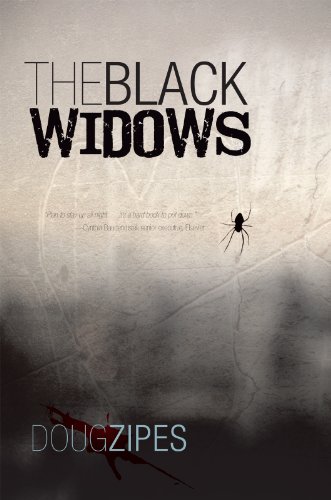
The Black Widows
From the back room of a small second hand bookstore in Chappaqua, New York, two elderly widows are at the center a web of espionage, vengeance and terrorism with plans to bring the Western world to its knees...
All of Doug Zipes books are available to buy online from Amazon as well as at Barnes and Noble and iUniverse.